

Rajasthan might be known worldwide for its forts and palaces, but its wild side is just as unforgettable. From tiger‑rich valleys to quiet bird sanctuaries and leopard‑dotted granite hills, the state has some of the most diverse wildlife experiences in India packed into a surprisingly compact map.
You’ll find classic big‑cat destinations like Ranthambore and Sariska, where tigers share space with crumbling forts, ancient temples and lakes that glow at sunrise. In the east, Keoladeo Ghana National Park at Bharatpur turns into a birding paradise each winter, with wetlands full of storks, ducks, geese and countless other migratory visitors. Head west and the landscape shifts completely—Desert National Park near Jaisalmer protects fragile dunes and grasslands where the great Indian bustard, foxes and raptors rule the sky.
If you prefer quieter, offbeat escapes, Kumbhalgarh and Mount Abu wildlife sanctuaries wrap around forested Aravalli hills, while Jawai’s rocky landscape has earned it the nickname “Leopard Capital of India.” Whether you’re planning your first safari or building a serious wildlife bucket list, Rajasthan’s sanctuaries offer everything from weekend trips to deep nature journeys, all easily combined with the state’s famous cultural circuit.
How to choose the right sanctuary for you
Before we dive into individual parks, it helps to be clear about what kind of wildlife experience you want.
- Tiger & big cat focus: Ranthambore, Sariska, Mukundara, Jawai (leopards).
- Birding paradise: Keoladeo (Bharatpur), Tal Chhapar, Desert National Park, Gajner.
- Offbeat hill and forest landscapes: Kumbhalgarh, Mount Abu, Sitamata.
- Desert and unique endemic species: Desert National Park (great Indian bustard, desert fox), Tal Chhapar (blackbuck).
Rajasthan Wildlife Planning
Not Sure Which Rajasthan Wildlife Experience Is Right for You?
Choose between Ranthambore tiger safaris, Jawai leopard drives, Bharatpur birdwatching, desert wildlife near Jaisalmer or quieter Aravalli forest escapes. Tell us your travel month and interests, and we will help you choose the right route.
Contact Me to Choose a Wildlife RouteThink about:
- – You start from Jaipur, Udaipur, Jodhpur, Jaisalmer or Delhi
- – Season: winter for comfort and birds, late spring for intense big-cat sightings
- – Travel style: hardcore safaris vs relaxed nature and culture mix
Now let’s look at the must‑visit wildlife spots one by one.
Ranthambore Tiger Reserve – Tigers among ruins
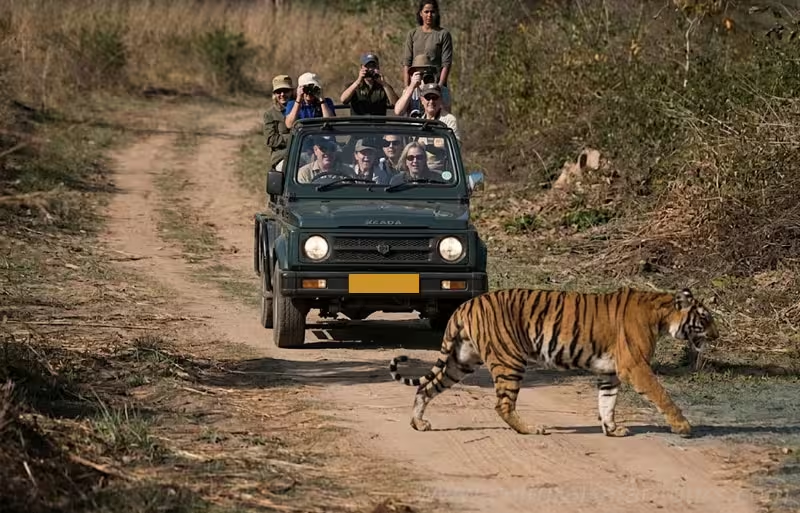
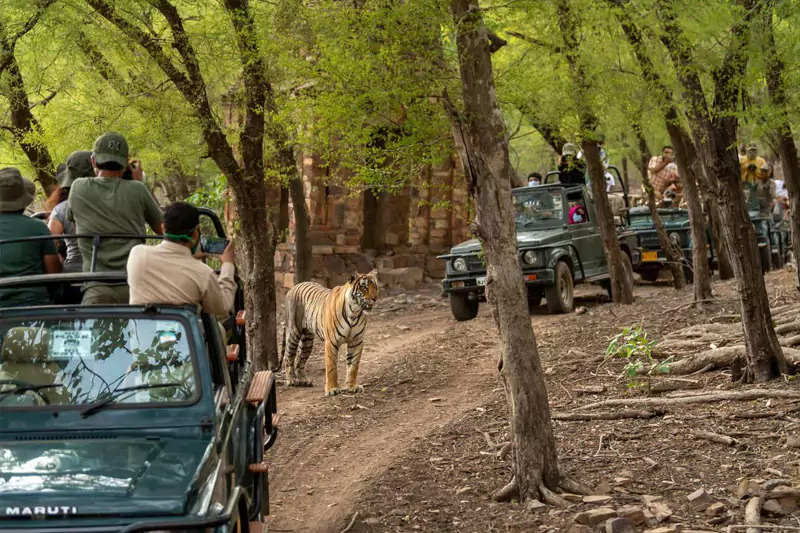
Even if you’re new to the Ranthambore wildlife Tour, you’ve probably heard of Ranthambore, one of India’s most iconic tiger reserves. The first time I watched a tiger stroll past the crumbling ramparts of Ranthambore Fort, it felt like the jungle and history books had collided in a single frame.
Ranthambore began as a wildlife sanctuary and is now part of Ranthambore Tiger Reserve, which also includes the core national park and adjoining Kailadevi Wildlife Sanctuary. The official core Ranthambore National Park covers around 282 sq km, but the larger tiger reserve landscape is over 1,500 sq km.
What makes Ranthambore special
- :- One of the best places in India to see wild tigers in daylight, thanks to open terrain and lakes.
- :- Dramatic setting: lakes, ancient temples, and the UNESCO‑listed fort towering above the forest.
- :- Good connectivity from Jaipur and Delhi makes it perfect for 2–3 day trips.
Wildlife highlights include tigers, leopards, sloth bears, caracals (if you’re lucky), mugger crocodiles, sambars, and a long bird list with painted storks, kingfishers and owls.
Practical tips
- Best time: October–March for pleasant weather; April–June for peak tiger sightings near waterholes.
- Getting there: Train or road to Sawai Madhopur from Jaipur/Delhi; the park gate is a short drive away.
- Who it’s for: First‑time safari goers, photographers, families, and anyone who wants that “classic tiger photo.
Sariska Tiger Reserve – Weekend wilderness from Delhi & Jaipur
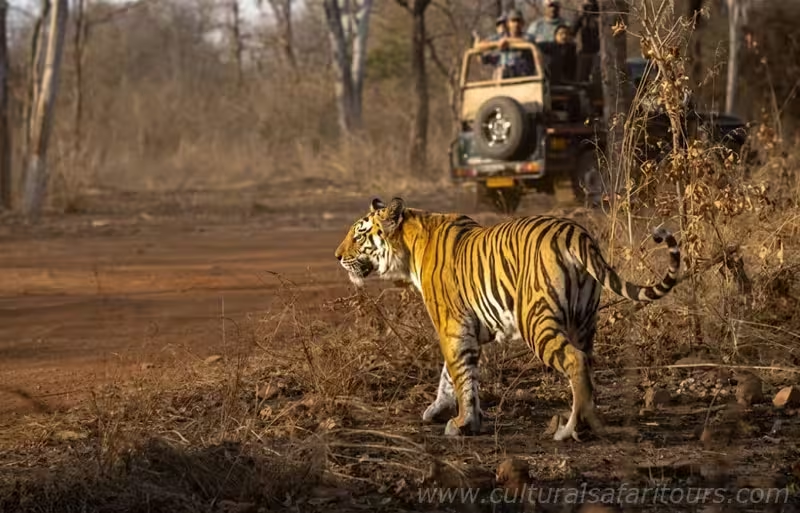
If you live in Delhi or Jaipur and want a quick wildlife break without long travel, Sariska Tiger Reserve is often the easiest option.
Located in Alwar district in the Aravalli hills, Sariska started as a sanctuary and later became a tiger reserve, with about 400 sq km of national park area within a larger protected landscape.
Why Sariska deserves a spot
- :- Short drive from Delhi (around 4–5 hours) and Jaipur (about 2–3 hours), so it works as a genuine weekend escape.
- :- Mix of dry deciduous forests, hills and old temples like Pandupol, making it more than just a safari.
- :- Home to tigers (reintroduced from Ranthambore), leopards, hyenas, jackals, nilgai, sambar and lots of peacocks.
It’s not as tiger‑dense or predictable as Ranthambore, but the wilder, less commercial feel is part of the charm. I’ve had quiet morning drives there with hardly another jeep in sight—a rarity in popular parks.
Practical tips
- Best time: November–February for pleasant weather; March–April for better big‑cat chances.
- Combine with: Neemrana, Alwar city, Bhangarh or a quick Jaipur extension.
- Who it’s for: Weekend travellers, Delhi NCR families, budget wildlife lovers.
Desert National Park – Wildlife in the dunes
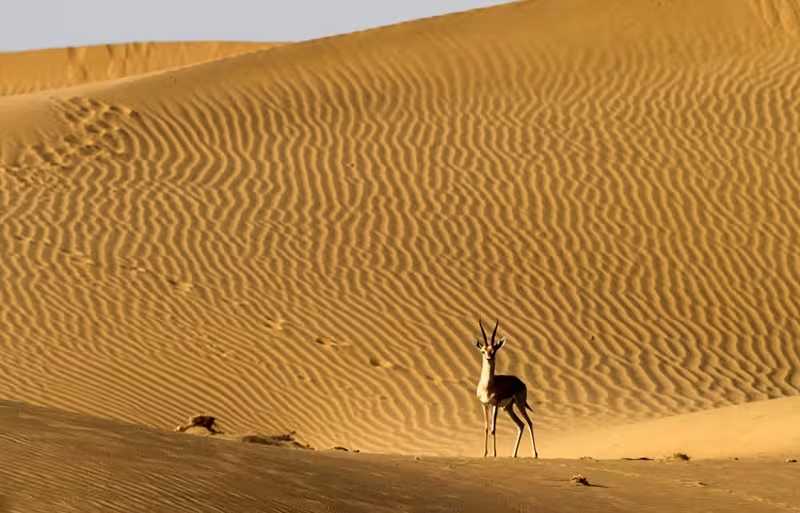
When you picture the Thar, you probably think of camels and dunes. What surprises many visitors is that one of India’s largest protected areas, Desert National Park ies just outside Jaisalmer.
Spread over roughly 3,162 sq km in Jaisalmer and Barmer districts, this arid landscape protects fragile desert ecosystems, salt flats, rocky outcrops and seasonal lakes.
What you’ll see
- :- Flagship species: great Indian bustard, chinkara, desert fox, Indian wolf, and a wide variety of raptors and migratory birds.
- :- Winter brings eagles, harriers, vultures and cranes, giving it huge appeal for birders.
- :- The desert light—especially at sunrise and sunset—makes this one of the most photogenic parks in Rajasthan.
Unlike enclosed forest safaris, the experience here is about big horizons. You’ll bounce along sandy tracks, scanning low scrub for movement while wind shapes the dunes around you.
Practical tips
- Base: Jaisalmer easy to combine with desert camps and fort sightseeing.
- Best time: November–February; summer can be extreme and dangerous.
- Who it’s for: Birders, landscape photographers, travellers who want a mix of desert culture and conservation.
Keoladeo Ghana National Park (Bharatpur) – Birding heaven
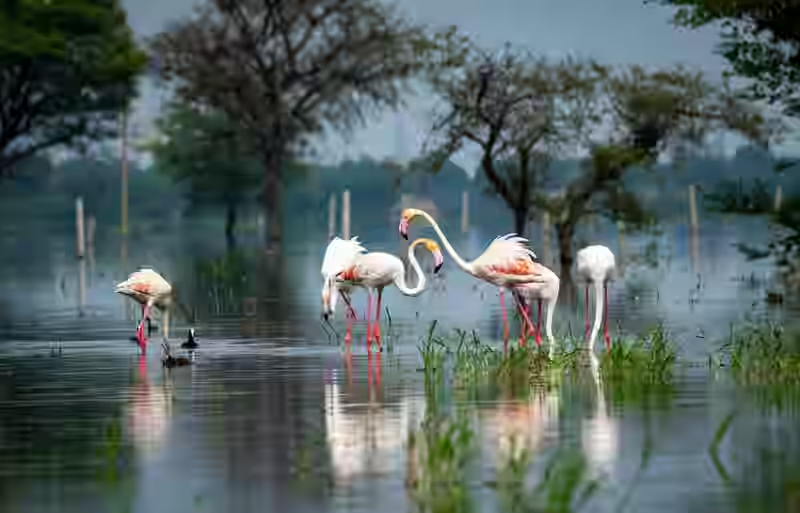
Formerly known as Bharatpur Bird Sanctuary, Keoladeo is a compact park with a massive reputation. It’s one of India’s premier birding destinations and a UNESCO World Heritage Site, famous for waterbirds and migratory species.
The official forest stats list Keoladeo National Park at 28.73 sq km, but in that small area it manages to host hundreds of bird species across wetlands, grasslands and woodland patches.
Why birders (and non‑birders) love it
- :- In peak season, you can see dozens of species in a single morning storks, pelicans, ducks, herons, eagles and more.
- :- The park is mostly flat and explored via cycles, cycle‑rickshaws or on foot, so it feels relaxed and accessible.
- :- Historically known for rare visitors like the Siberian crane (now absent), it still attracts a remarkable variety of migratory birds.
I still remember my first rickshaw ride there: the guide quietly pointing out birds I would have completely missed “Look, there’s a spotted owlet in that tree hollow” while the morning fog slowly lifted off the water.
Practical tips
- Best time: November–February for migrants; late monsoon and early winter for lush marsh views.
- Getting there: Easy stop on the Golden Triangle circuit between Delhi, Agra and Jaipur.
- Who it’s for: Birders, families, photographers, and anyone who wants a gentler wildlife experience than bumpy jeep safaris.
Kumbhalgarh Wildlife Sanctuary – Leopards, hills and a mighty fort
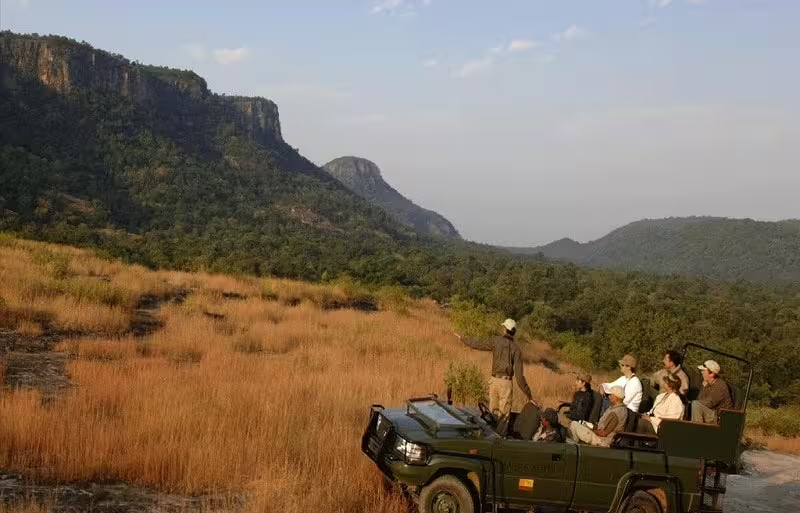
Encircling the famous Kumbhalgarh Fort, this sanctuary covers parts of Udaipur, Rajsamand and Pali districts, with an official area of around 610.5 sq km.
Here, the Aravalli hills roll away in blue ridges, dotted with forests, villages and ancient walls. It feels like a bridge between culture and wilderness—exactly the kind of place where you can spend the morning on a safari and the evening watching a light-and-sound show at the fort.
What makes Kumbhalgarh unique
- :- Known for leopards, wolves, hyenas, jackals and a healthy prey base, along with birds like grey junglefowl and peafowl.
- :- Terrain is hilly and scenic, offering different vistas from typical tiger parks.
- :- Less busy than Ranthambore or Sariska, so you get a more offbeat, slower experience.
You won’t always see big cats here, but just driving through the hills at dawn, with mist in the valleys and the fort walls glowing gold, is worth the trip.
Practical tips
- Base: Kumbhalgarh or Udaipur (about 2–3 hours away by road).
- Best time: October–March; monsoon for very green landscapes but leeches and road issues in some stretches.
- Who it’s for: Travellers who enjoy combining heritage, views and quieter wildlife drives.
Mount Abu Wildlife Sanctuary – Green oasis in the Aravallis
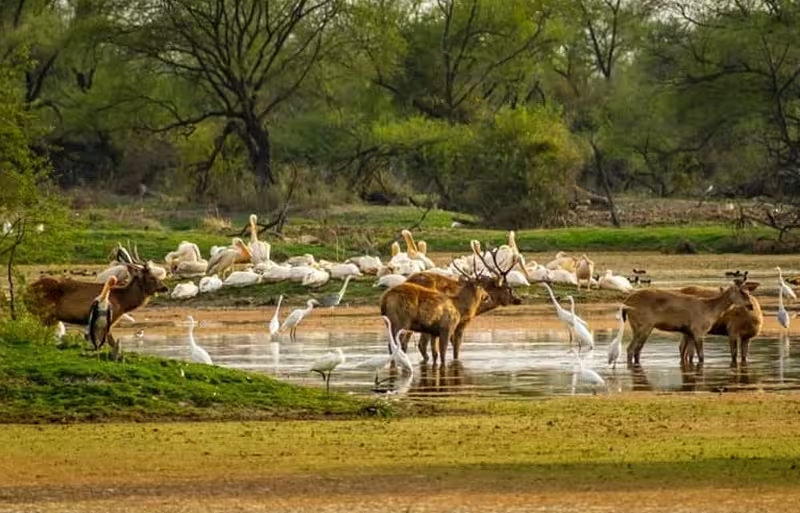
Mount Abu is famous as Rajasthan’s only true hill station, and its wildlife sanctuary is a refreshing contrast to the state’s dry plains.
Covering a smaller but ecologically rich area (around 100 sq km according to forest stats), Mount Abu Sanctuary protects high‑altitude forests, cliffs and valleys with surprisingly high biodiversity.
Why it’s worth your time
- Cooler temperatures and evergreen patches make it a relief if you’re travelling in late winter or early summer.
- Wildlife includes leopards, jungle cats, striped hyenas, porcupines and more than 250 bird species, along with orchids and medicinal plants.
- You can mix short treks, viewpoints like Sunset Point, and temple visits with nature walks.
The best experiences here often happen on foot: quietly walking through forested paths and hearing only birds and wind in the trees.
Practical tips
- Best time: October–March; shoulder months (April, early May) are fine thanks to altitude.
- Combine with: Udaipur, Kumbhalgarh or even Gujarat if you’re coming from that side.
- Who it’s for: Couples, slow travellers, trekkers, and birders who enjoy forest walking more than jeep safaris.
Jawai Leopard Reserve – Leopards, Rabari culture and red granite hills
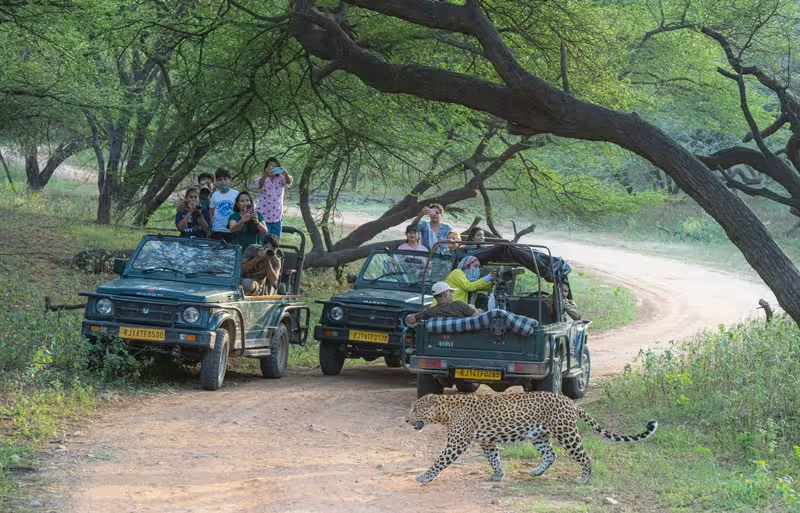
Officially, Jawai is not a notified national park, but for travellers it behaves like one of Rajasthan’s most exciting wildlife landscapes.
Located in Pali district, near the Jawai Bandh (dam), this area of granite hills, scrub forests and villages has become famous as the “Leopard Capital of India.”
What makes Jawai different
- :- High leopard density and surprisingly frequent sightings on the rocky hills, often near temples and villages.
- :- Unique coexistence: the local Rabari herders consider leopards sacred, and livestock losses are rare despite daily sharing of space.
- :- Jawai Dam adds another layer: crocodiles basking on the banks and migratory birds like flamingos, cranes and storks.
Because Jawai is a community landscape rather than a tightly fenced park, safaris feel more open and fluid. You could be watching a leopard on a boulder at sunset and, minutes later, sipping tea in a village courtyard.
Practical tips
- Base: Leopard‑focused camps and resorts near Jawai Bandh and Bera.
- Best time: October–March; safaris can run year‑round, unlike many tiger reserves that close in monsoon.
- Who it’s for: Repeat wildlife travellers, photographers, and anyone who wants big cats without the big crowds.
Tal Chhapar Blackbuck Sanctuary – Grassland gem of northern Rajasthan
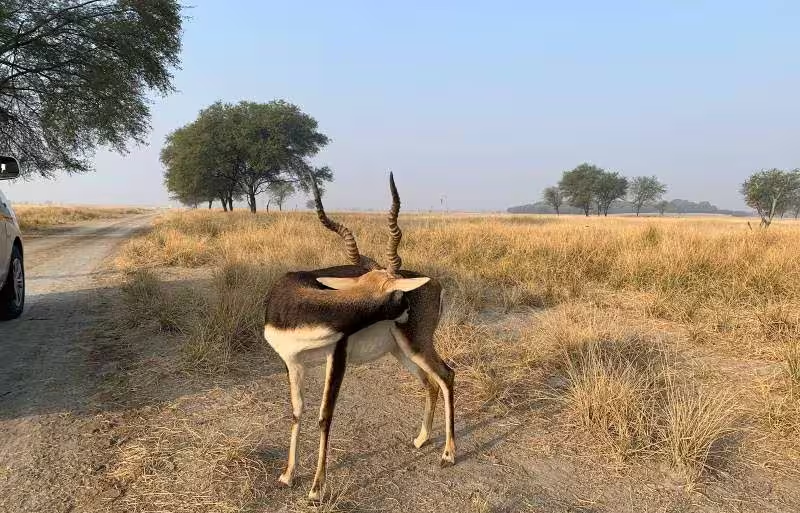
If you love open grasslands and elegant antelopes, Tal Chhapar Sanctuary in Churu district should be on your radar.
Though not as heavily promoted as Ranthambore or Sariska, it’s considered one of the best places in India to see blackbuck in large herds, along with desert and grassland birds.
Why visit Tal Chhapar
- :- Wide, flat grasslands dotted with acacia trees provide perfect photography conditions.
- :- Besides blackbuck, you can spot foxes, desert cats and numerous raptors and migratory birds—harriers, kestrels, eagles.
- :- It’s relatively small and easy to cover in a day or two, making it ideal for focused trips.
Many serious birders and wildlife photographers treat Tal Chhapar as a core stop in their Rajasthan circuit, especially in winter.
Practical tips
- Best time: October–March for comfortable conditions and birds.
- Combine with: Bikaner, Gajner or even Jaipur, depending on your route.
- Who it’s for: Birders, photographers, travellers who enjoy quiet, niche sanctuaries.
Gajner Wildlife Sanctuary – Lakeside escape near Bikaner
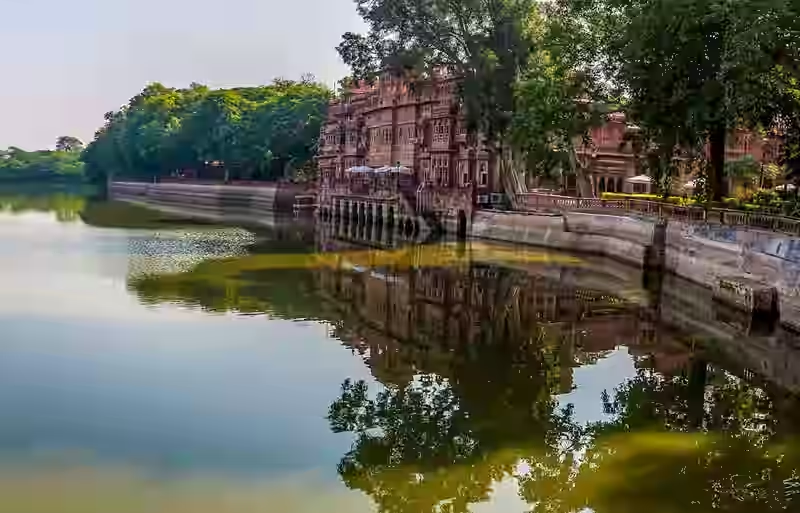
Just about 32 km from Bikaner on the Jaisalmer road, Gajner Wildlife Sanctuary sits around a lake and palace complex, offering a softer, heritage‑plus‑wildlife experience.
The Rajasthan Tourism department lists it as a notable sanctuary for species like nilgai, chinkara, blackbuck, wild boar and numerous waterbirds, especially in winter.
Why Gajner works so well
- :- Easy day trip or overnight add‑on if you’re already visiting Bikaner.
- :- Great for travellers who want light wildlife experiences rather than full hardcore safaris.
- :- Lovely winter birding around the lake, with a mix of resident and migratory species.
Practical tips
- Best time: November–February.
- Combine with: Karni Mata Temple, Bikaner Fort, and desert experiences further west.
- Who it’s for: Families, culture travellers, first‑time visitors to Rajasthan.
National Chambal Gharial Sanctuary (Rajasthan stretch) – River safaris and rare reptiles
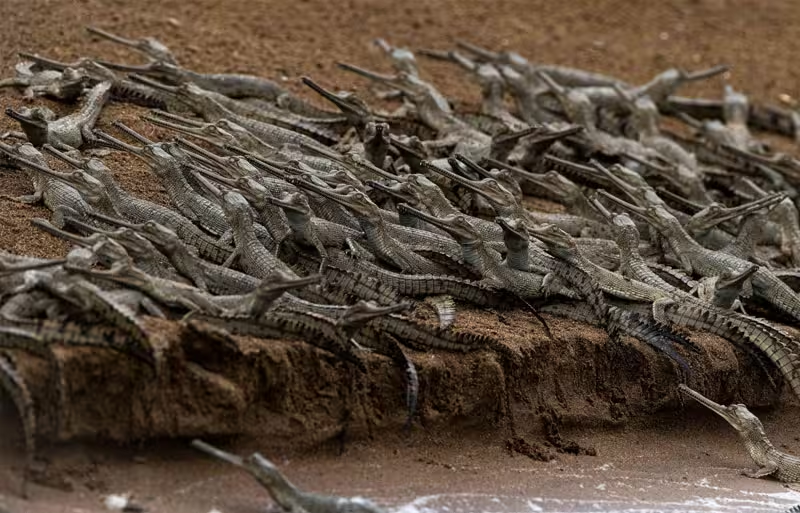
Although the National Chambal Sanctuary spans Rajasthan, Madhya Pradesh and Uttar Pradesh, Rajasthan’s stretch near Kota and Dholpur gives you access to one of India’s most important riverine protected areas.
It’s officially listed as National Gharial Sanctuary or National Chambal Gharial Wildlife Sanctuary in state forest records, with over 560 sq km of protected habitat across multiple districts.
Why Chambal is special
- :- Dedicated to conserving critically endangered gharials, along with the red‑crowned roof turtle and Ganga river dolphin.
- :- Boat safaris give you a very different perspective from forest jeep rides low to the water, with crocodiles and birds along the banks.
- :- Birdlife is exceptional, making it a favourite with serious naturalists and photographers.
Practical tips
- Best time: November–March when river levels and visibility are ideal.
- Access points: Near Kota, Dholpur and other riverfront towns—often combined with cultural sightseeing.
- Who it’s for: Travellers who want something beyond tigers and leopards, and are curious about freshwater ecosystems.
When is the best time to visit Rajasthan’s wildlife sanctuaries?
Rajasthan’s parks and sanctuaries can technically be visited most of the year, but the experience changes a lot by season.
October–February (Peak travel + birds)
- Migratory birds at Keoladeo, Desert NP, Gajner and Tal Chhapar.
- Great for mixed itineraries with cities and forts.
March–early May (Hot but great sightings)
- Rising temperatures push animals to water sources—good for tigers in Ranthambore and Sariska, leopards in Jawai.
- Fewer tourists compared to peak winter.
Late May–September (Heat and monsoon)
- Some parks have restrictions or closures; desert areas become harsh.
- Jawai safaris can operate year‑round, and hill areas like Mount Abu stay more comfortable.
- Always check current regulations on Rajasthan Forest Department or Tourism websites before you finalise dates.
Sample 7‑day Rajasthan wildlife itinerary
To make this more practical, here’s how you could weave multiple sanctuaries into one trip:
Day 1–2: Jaipur → Ranthambore
Drive from Jaipur to Sawai Madhopur, afternoon safari on Day 1, morning safari on Day 2. Visit Ranthambore Fort if time permits.
Day 3: Ranthambore → Bharatpur (Keoladeo)
Drive via Karauli or Dausa. Evening cycle‑rickshaw birding in Keoladeo.
Day 4: Bharatpur → Sariska
Morning birding, then head towards Alwar/Sariska. Evening buffer safari or temple visit.
Day 5–6: Sariska → Jawai
Longer transfer (can be broken via Jaipur/Udaipur). Two leopard safaris around Jawai hills and dam.
Day 7: Jawai → Kumbhalgarh or Udaipur
Morning drive through Kumbhalgarh Wildlife Sanctuary, evening at the fort or lakes of Udaipur.
You can customise this foundation with Tal Chhapar, Mount Abu or Desert National Park depending on your entry and exit cities.
Plan Your Rajasthan Wildlife Route
Want to customise this Rajasthan wildlife itinerary?
Tell us your entry city, exit city, preferred parks, travel dates and interests. We will help you create a comfortable route with the right safari stays, transfers and sightseeing stops.
Practical tips for visiting wildlife sanctuaries in Rajasthan
A few real‑world tips that make a big difference on the ground:
Book permits in advance
- – Ranthambore, Sariska and some other reserves have online booking systems and zonal allocations.
- – For Jawai and community‑run safaris, coordinate with your stay—they usually manage permissions.
Choose the right safari slot
- – Early morning: better light, active animals, cooler temperatures.
- – Late afternoon: dramatic sunsets, good for leopards at Jawai and birds at waterbodies.
Carry the right gear
- – Neutral clothing, hat, sunglasses, scarf, reusable water bottle.
- – Binoculars and, if you’re into photography, at least a moderate zoom lens.
Be a responsible guest
- – No loud music, shouting or feeding wildlife—Rajasthan Forest Department and tourism campaigns stress this in their guidelines.
- – Support ethical operators who respect speed limits, keep distance from animals and avoid spotlight harassment at night.
Mix culture and wildlife
- – Many sanctuaries are near major heritage sites Ranthambore & Sawai Madhopur, Kumbhalgarh & Udaipur, Gajner & Bikaner, Jawai & Jain temples in Ranakpur.
- – This mix keeps non‑wildlife‑obsessed travellers in your group just as happy.
Final thoughts: why these sanctuaries belong on your Rajasthan list
Rajasthan isn’t just about stone and sand it’s alive with forests, rivers, grasslands and desert skies full of wings. From tiger tales in Ranthambore and weekend escapes to Sariska to the surreal leopard landscapes of Jawai and the delicate wetlands of Keoladeo, each sanctuary here has its own mood and rhythm.
If you build your itinerary around a couple of these wild places rather than treating safaris as an afterthought you’ll come home with a very different memory of Rajasthan: one that smells of sal and desert wind, echoes with peacock calls, and keeps you planning “just one more” trip back.
FAQs about wildlife sanctuaries in Rajasthan
According to the Rajasthan Forest Department and recent protected‑area data, the state has 3 officially notified national parks and 25+ wildlife sanctuaries, along with conservation reserves and tiger reserves covering around 2.9% of its geographical area.
For a first trip, most travellers start with Ranthambore Tiger Reserve, Sariska Tiger Reserve, Keoladeo Ghana National Park (Bharatpur), Desert National Park (Jaisalmer) and Kumbhalgarh Wildlife Sanctuary, because they combine good wildlife sightings with easy access from major cities like Jaipur, Delhi, Udaipur and Jaisalmer.
The most comfortable and wildlife‑rich months are October to March, when temperatures are pleasant and migratory birds flock to wetlands such as Keoladeo, Gajner and Desert National Park. Big‑cat sightings often peak in the hotter pre‑monsoon months (March–early May) around water sources in Ranthambore, Sariska and Jawai.
Ranthambore National Park in Sawai Madhopur is widely considered Rajasthan’s best tiger destination, thanks to a healthy tiger population, open terrain and high visitor infrastructure. Sariska Tiger Reserve in Alwar and Mukundra Hills Tiger Reserve near Kota also host tigers, but sightings are generally less predictable than Ranthambore.
For leopards, Jawai (near Pali) is the standout choice, with granite hills, temples and villages sharing space with a dense leopard population and year‑round safari options. You also have good leopard potential in Kumbhalgarh, Jhalana Leopard Safari Park (Jaipur) and the hill forests around Mount Abu, though sightings there tend to be more seasonal and luck‑based.
The top birding hotspot is Keoladeo Ghana National Park at Bharatpur, a UNESCO World Heritage wetland known for its winter concentrations of storks, pelicans, ducks, geese and raptors. Desert and grassland birders also love Tal Chhapar Blackbuck Sanctuary, Gajner Wildlife Sanctuary and Desert National Park, which attract harriers, eagles, sandgrouse and other arid‑zone species.
Yes, many sanctuaries are very family‑friendly, especially Keoladeo (easy walking and cycle‑rickshaws), Gajner, Sariska and Jhalana Safari Park near Jaipur, where safaris are shorter and infrastructure is visitor‑oriented. For younger children or first‑time visitors, these are often less tiring than long, bumpy drives in larger tiger reserves.
For popular reserves like Ranthambore and Sariska, it’s strongly recommended to book jeep or canter safaris online in advance, as zones and time slots can sell out quickly in peak season. In places like Jawai, Kumbhalgarh or community‑run areas, safari bookings are often managed directly by lodges and camps, so it’s best to confirm details with your stay before you travel.
Yes, Rajasthan has an increasing focus on eco‑tourism, with regulated safaris, community‑based experiences and nature walks run under forest and tourism‑department guidelines. Choosing operators who follow speed limits, avoid crowding wildlife, minimise plastic use and employ local guides is the easiest way to make your visit more responsible and beneficial for the local ecosystem.
Plan 2–3 nights for one wildlife destination. A 7–10 day trip is better if you want to combine multiple parks with Rajasthan sightseeing.
Yes. Ranthambore, Keoladeo, Sariska and Jawai can suit families when you choose comfortable stays and avoid very hot travel dates.
Yes. Ranthambore pairs well with Jaipur and Agra; Jawai works well with Udaipur and Kumbhalgarh; and Desert National Park can be combined with Jaisalmer.
Yes. Rajasthan combines tiger safaris, leopard tracking, birdwatching, desert wildlife and heritage cities in one trip.
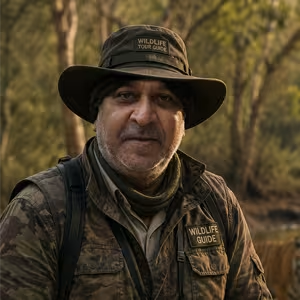
Written By
Sudhir Sharma
India Wildlife, Safari & Cultural Travel Specialist
Sudhir Sharma helps travelers plan thoughtful wildlife safaris, birdwatching tours, Rajasthan heritage journeys and customised India holidays. His practical local guidance helps couples, families, photographers and nature lovers choose the right national parks, travel season and itinerary for a comfortable, memorable trip.