

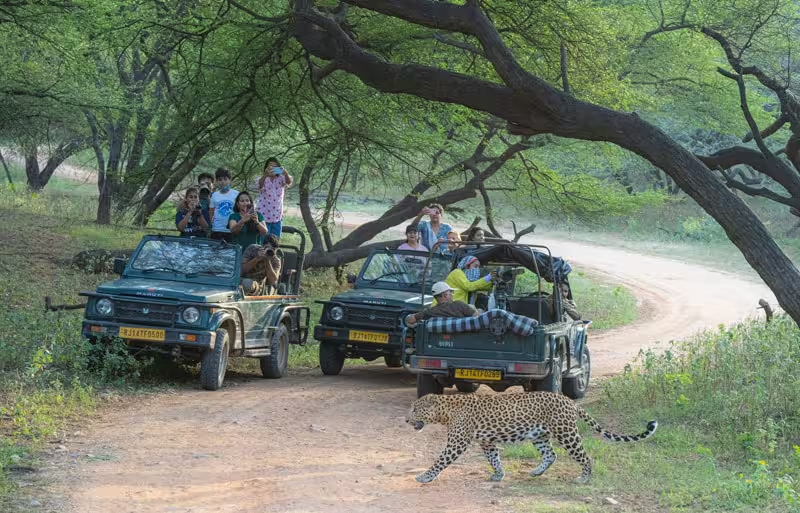
Nestled in the Aravalli hills of Rajasthan’s Pali district, Jawai is often called the “Leopard Capital of India” for its unusually high chances of seeing leopards moving freely among rocky hills, villages, and the Jawai Bandh (dam) area. Unlike fenced national parks, this is a landscape where leopards, Rabari shepherds, and their livestock share space in a rare example of coexistence.
But here’s the trick: the experience changes dramatically with the season. The same hill that feels cool and magical in January can feel blazing in May, and the same valley that gives you 80% leopard sighting chances in winter might drop to 40% in peak monsoon. If you choose your month and Jawai safari timing well, you can dramatically improve both your sighting chances and your comfort on the jeep.
Jawai in a nutshell: why it’s so good for leopards
Before we talk dates, it helps to understand what makes Jawai different from a typical tiger reserve.
- The landscape is dominated by granite hills, caves, and scrub, which gives leopards natural den sites and vantage points.
- Leopards here are largely free-roaming and surprisingly visible, often seen sitting on boulders, moving along ridges, or resting near temples and villages.
- The area around Jawai Bandh attracts prey animals and birds, which in turn keeps predators active around this water source.
Safari operators openly say that leopard sighting success can exceed 80% in peak season, especially with experienced trackers who know each cat’s territory. That doesn’t mean you’re guaranteed a sighting every single drive, but it does mean Jawai offers some of the best odds in India if you play your timing right.
Quick overview: best time by travel style
If you don’t want to read the whole breakdown yet, here’s a simple snapshot:
- Best overall (weather + sightings):
October to March, especially November to February. - Best for hard-core sightings and drama (but hot):
March to June (pre-monsoon / early summer). - Best for scenery, greenery, and low prices (lower sightings):
July to September (monsoon), if safaris are operational and you’re okay with unpredictability.
Now let’s go season by season.
Winter & Early Spring (October – February): Peak season for leopard safaris
If you want the classic Jawai leopard safari experience with pleasant weather and very high sighting chances, this is your window.
From October onward, the monsoon retreat leaves the landscape clean and refreshed, while daytime temperatures start to drop into a very comfortable range. By November, Jawai settles into a beautiful rhythm of crisp mornings and cool evenings, and this continues roughly until February.
Weather & comfort
- Day temperatures: roughly 10–25°C in the core winter months.
- Mornings and evenings are cool; you’ll want a light jacket on open jeeps in December–January.
- Rainfall is minimal, so safari cancellations due to weather are rare.
In simple terms, this is when you can enjoy long drives without feeling like you’re baking on the jeep.
Leopard sightings in winter
Multiple operators and resorts describe October–February as the top season for leopard sightings in Jawai. Leopards are naturally more active in the cooler hours around dawn and dusk (crepuscular behavior), and the moderate temperatures mean they move more comfortably near open ridges and lower slopes.
Some operators mention success rates above 80% for leopard sightings on multi-safari stays in this period, including mothers with cubs. The dry terrain from late November onwards also improves visibility, as there’s less dense foliage to hide animals.
Pros of visiting Jawai in October – February
- Best balance of comfort and high leopard activity.
- Good light for photography in both mornings and evenings.
- Strong chances of seeing leopards, hyenas, and other wildlife near hills and water.
- Winter also attracts a variety of migratory birds to Jawai Bandh, which adds an extra layer for birders and photographers.
Cons
- This is peak season, so resorts and safaris can sell out early, especially around Christmas–New Year and long weekends.
- Prices are generally at their highest compared to summer or monsoon discount periods.
Ideal for:
First-time visitors, families, couples, photographers, and anyone who wants a comfortable yet wild experience with strong leopard sighting chances.
Planning a Jawai Leopard Safari?
Let us help you choose the best travel time, safari drives and stay for your Jawai wildlife experience.
Plan Jawai Safari WhatsApp UsPre-Monsoon & Summer (March–June): Hot, intense, and rewarding for serious wildlife lovers
Once winter passes, March to June brings heat—and with it, a very different kind of leopard safari. Temperatures rise quickly, and by May, average highs reach around 33°C or more, with peak days going above 40°C.
What the heat does to wildlife
- Water becomes scarce, so prey animals bunch up near remaining sources, including Jawai Bandh and small natural pools.
- Leopards often use large boulders and shaded cave entrances as resting spots during the hottest parts of the day, which can make them easier to spot on open rock faces.
- Some guides actually report more dramatic predator–prey activity around water sources in this period than in cooler months.
In other words, while the heat is challenging for humans, it can concentrate wildlife and give you that “documentary-style” action if you plan safaris at the right time of day.
Pros of visiting in March – June
- Excellent chances of sightings around water, especially at dawn and late afternoon.
- Fewer tourists than in peak winter, so you often get quieter safaris and better deals (many operators mention 20–30% lower prices).
- Good time for birdwatching, including rollers and paradise flycatchers in the region.
Cons
- Temperatures can hit 35 – 45°C, especially in May and early June.
- Midday safaris can be extremely uncomfortable without proper hydration and AC access between drives.
- You have to be disciplined about timings: early-morning and late-evening safaris become essential, mid-day is usually dead for both animals and humans.
Who should consider this season?
- Photographers who want intense, high-contrast images around waterholes.
- Repeat visitors to Jawai who have already experienced winter and are ready for a more demanding trip.
- Budget-conscious travellers who don’t mind heat and want lower room/safari rates.
If that sounds like you, March and early April can be a powerful sweet spot: still hot enough for concentrated sightings, but not yet at the brutal extremes of late May.
Monsoon (July – September): Green, quiet, and unpredictable
Monsoon brings an entirely different personality to Jawai. Hills turn lush, the air cools, and backwaters fill but leopard sightings become less predictable.
What changes with the rains
- Visibility drops because of thicker foliage, mist, and low clouds at times.
- Leopards tend to move deeper into the hills for cover, which can reduce open-rock sightings.
- Some sources mention sighting probabilities dropping to around 40%, compared to 80%+ in peak winter.
At the same time, scenery, birdlife, and overall atmosphere are at their most dramatic, and rates at many properties can drop by up to 50% because of fewer visitors.
Are safaris always open in the monsoon?
Unlike some national parks that completely shut during monsoon, Jawai’s community landscape often remains accessible—but:
- Road conditions can be tricky, with mud and slippery tracks in heavy rain.
- Some activities or specific routes may be limited or avoided for safety.
It’s essential to check current conditions and confirm safari operations with your lodge if you’re planning a July–September trip.
Pros of visiting in the monsoon
- Lush, photogenic landscape a very different Jawai from what winter visitors see.
- Far fewer tourists and significant discounting on stays and safaris.
- Good for travellers who care more about overall nature experience than guaranteed cat sightings.
Cons
- Lower leopard sighting probability than winter or summer.
- Rain-related disruptions & reduced comfort on open jeeps.
Ideal for:
Scenery lovers, repeat visitors, offbeat travellers who are okay with fewer leopards in exchange for green hills, moody skies, and solitude.
Morning vs Evening Safari in Jawai: Which is better for leopard sightings?
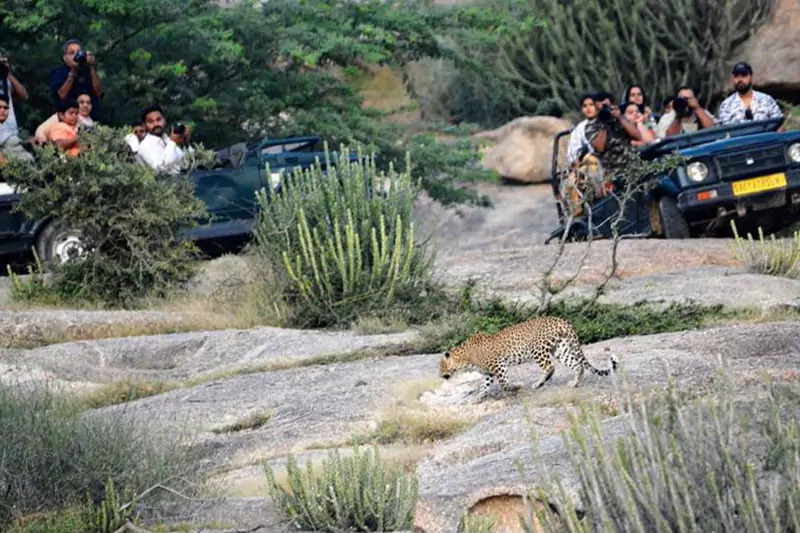
Once you’ve picked your month, the time of day becomes your next big decision. Many Jawai guides run two main slots: morning and evening safaris.
Morning safaris
Morning drives usually start just before or around sunrise, when temperatures are coolest, and wildlife is naturally active.
Why mornings are excellent:
- Leopards often return from night hunts to their caves at this time, so you can catch them walking along ridges or across open slopes.
- Light is softer and better for photography, especially in winter.
- In summer, mornings are far more comfortable than midday or early afternoon.
Some local guides consider mornings to be prime time for serious leopard tracking, especially if your goal is multiple, clear sightings.
Evening safaris
Evening safaris typically run from about 5:00 PM to 8:00 PM, depending on season and local regulations.
Why evenings are special:
- You get golden light and sunsets over the Jawai hills, which is a big plus for photographers and casual travellers.
- Leopards may be seen emerging from caves and taking up positions before night, especially in cooler months.
- Evenings feel more relaxed and scenic, making them ideal for families and first-time safari-goers.
In short:
- If you’re heavily focused on sightings and photography, prioritize morning safaris, then add evenings for variety.
- If you’re with family or want a balanced experience, mix one of each per day if your budget allows.
How many days & safaris should you plan?
Because Jawai has relatively high leopard density and open terrain, many people see leopards even on a single safari in good season—but for reliable, relaxed sightings, you should plan more.
Most serious operators and guides suggest:
- Minimum: 2 nights with 3–4 safaris (e.g., 2 mornings + 1–2 evenings).
- Ideal: 3 nights with 4–6 safaris, especially if you’re visiting outside peak winter.
This gives you a good chance to:
- See multiple individuals or families.
- Experience different hills and territories.
- Have backup drives in case one slot is affected by weather or low activity.
Best time to visit Jawai by traveller type
To make this even more practical, here’s how I’d match seasons to traveller profiles:
If this is your first leopard safari
Choose November to February.
You’ll get the best mix of comfort, consistent leopard activity, and overall experience.
If you’re a wildlife photographer
Two strong options:
- Dec–Feb for cool weather, soft light, and high success rates.
- Mar–early May if you’re willing to handle heat in exchange for intense sightings around water and dramatic behavior.
If you’re on a tighter budget
Look at:
- March–April for shoulder-season rates but still good sightings.
- Monsoon (July–September) only if you’re okay with fewer leopards and more focus on scenery.
If you love scenery and birding as much as leopards
- Post-monsoon (October) for fresh greenery + increasing leopard movement.
- Winter (Nov–Feb) for migratory birds at Jawai Bandh and clear skies.
Practical tips for planning your Jawai trip
A few small details make a big difference on the ground:
- Book early for winter (Nov–Feb) popular camps and lodges sell out, especially long weekends.
- Dress in layers in winter and light, breathable fabrics in summer; always carry a cap, sunglasses, and a scarf or buff for dust.
- Hydrate constantly in March–June; many operators recommend AC vehicles between safaris.
- Always choose experienced local guides they know individual leopards, territories, and current movement patterns.
- Respect the landscape: maintain distance, don’t pressure drivers to get too close, and avoid loud noise or flash photography around wildlife.
FAQs:
Jawai is a community wildlife landscape, not a conventional national park with fixed seasonal closures. Safari access may be possible during the monsoon, but rain can affect routes, track conditions and safari timings. The hills become green and scenic, although leopard sightings can be more variable due to dense vegetation and changing animal movement.
For most travellers, November to February is ideal, with pleasant weather, high leopard activity, and minimal rain disruptions.
Yes, March–June can be excellent for sightings around water and on open boulders, but it’s very hot, often above 35–40°C, so it’s better suited to experienced or heat-tolerant travellers.
Not necessarily, but you should know what you’re getting: lush scenery, fewer tourists, lower prices but lower sighting probability and possible rain-related limitations.
Morning safaris usually have a slight edge for sightings thanks to cooler temperatures and leopards returning from night hunts, but evenings offer beautiful light and good chances too.
Plan at least 3 – 4 safaris over 2 nights, more if you’re visiting in summer or monsoon or want a variety of sightings and locations.
Both can be rewarding. Morning safaris offer cooler weather and a chance to see leopards returning from night activity or resting around the granite hills. Evening safaris provide beautiful golden light and opportunities to spot leopards becoming active later in the day. Planning a combination of morning and evening drives is usually the best approach.
A stay of two nights with three or four safari drives is a practical minimum for first-time visitors. For a more relaxed experience and stronger opportunities to explore different leopard territories, plan a three-night stay with four to six safari drives.
Yes. Jawai is well suited to couples, families and first-time wildlife travellers, especially between November and February when temperatures are more comfortable. Choose a reliable lodge, experienced local tracker and an itinerary that leaves time to rest between safari drives.
Pack neutral-coloured clothing, comfortable closed shoes, sunglasses, sunscreen, a cap and a reusable water bottle. Winter mornings can be cold, so carry a warm jacket or layers. In summer, lightweight breathable clothing and sun protection are essential. Binoculars, a camera and a light scarf for dust can also be useful.
No wildlife sighting can be guaranteed. Jawai is known for strong leopard-viewing opportunities because leopards live around its rocky hills and surrounding landscape, but sightings depend on weather, season, leopard movement, safari timing and local conditions. Booking multiple drives gives you more time in the landscape and generally improves your chances.
If you build your Jawai leopard jeep safari plan when you want to travel, how much heat you can handle, and how important guaranteed sightings are to you, Jawai will rarely disappoint. The leopards are there year-round; the art is in choosing the season that lets you enjoy them on your terms.
Written By
Sudhir Sharma
India Wildlife, Safari & Cultural Travel Specialist
Sudhir Sharma helps travelers plan thoughtful wildlife safaris, birdwatching tours, Rajasthan heritage journeys and customised India holidays. His practical local guidance helps couples, families, photographers and nature lovers choose the right national parks, travel season and itinerary for a comfortable, memorable trip.