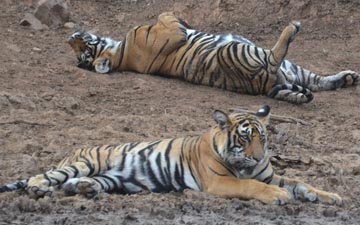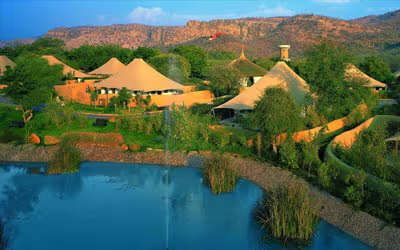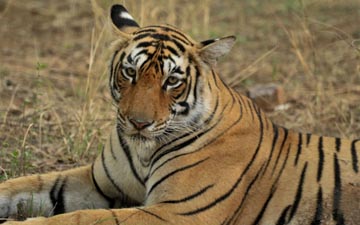


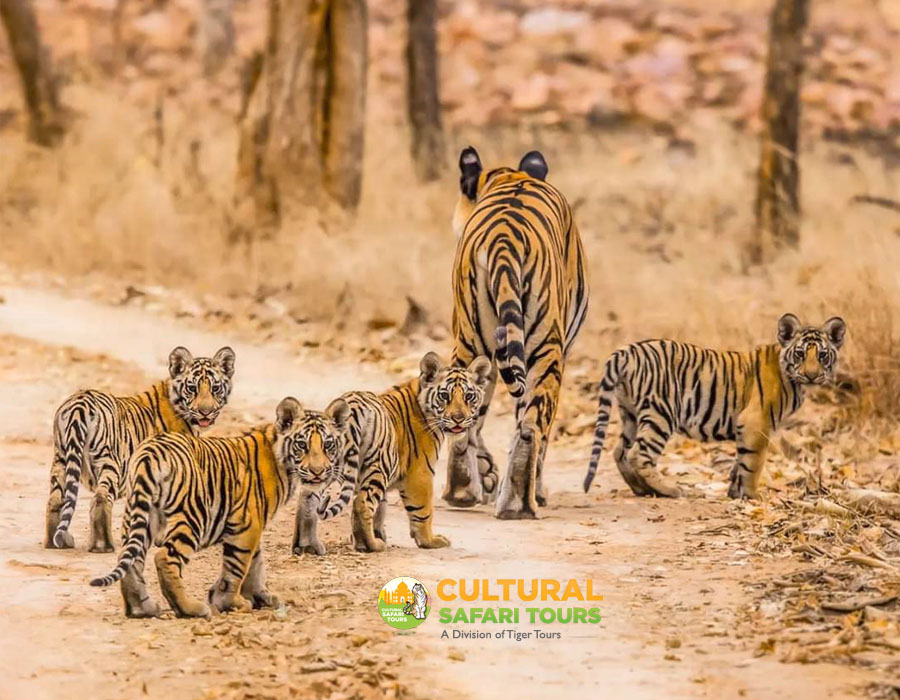
There’s something primal about tracking a tiger. The way your heart pounds when you hear a distant alarm call. The silence that falls over the jeep when pug marks appear fresh in the dust. That split second when golden fur and black stripes emerge from sal shadows, and the entire forest seems to hold its breath. I’ve been chasing that feeling across India’s tiger reserves for years now, and every single encounter whether a 30-second glimpse or a full hour of a tigress with cubs feels like a gift.
India is home to around 3,000+ wild tigers, representing roughly 75% of the world’s remaining population. With 58 officially notified tiger reserves spread across the country, from the Himalayan foothills to the Western Ghats and coastal mangroves, you’re truly spoiled for choice. But not all tiger parks are created equal. Some offer near-guaranteed sightings, while others test your patience. Some combine wildlife with stunning landscapes and heritage, while others are pure, hardcore jungle.
This guide will walk you through the best tiger safari national parks in India, how to choose the right one for your style, when to visit, how to book, and what makes each reserve unique. Whether you’re a first-timer dreaming of your first tiger or a repeat visitor hunting for that perfect frame, this is your 2026 roadmap.
Why India is the world’s tiger safari capital
Before we dive into specific parks, let’s set the stage. India didn’t just save the tiger from the brink it brought the species back so successfully that tiger tourism has become a global wildlife travel category of its own.
The numbers tell the story
The 2022 All India Tiger Estimation counted 3,682 tigers (range 3,167–3,925), more than double the 2006 count of around 1,400. The 2026 census is currently underway, with results expected in 2027, and early indicators suggest the population continues to grow at roughly 6% annually.
Madhya Pradesh leads with the highest tiger count, followed by Karnataka, Uttarakhand, Maharashtra and Tamil Nadu. This growth has been driven by Project Tiger (launched 1973), community involvement, anti-poaching measures, and, importantly, well-managed ecotourism that funds conservation and creates local livelihoods.
What makes Indian tiger safaris different
Unlike Africa’s open savannas where you can spot big cats from a distance, Indian tiger reserves are mostly dense forests sal, teak, bamboo, grasslands where sightings demand patience, luck and local knowledge. That element of unpredictability is exactly what keeps serious wildlife photographers and enthusiasts coming back season after season.
You’re not just tracking an animal; you’re reading the forest. Alarm calls from sambar deer, langur monkeys going silent, fresh scratches on a tree, pug marks crossing the trail these are the clues that turn a drive into a detective story.
How to choose the right tiger reserve for you
With nearly 60 reserves to pick from, narrowing your list can feel overwhelming. Here’s how I think about it:
By sighting probability
If your main goal is seeing a tiger, prioritize parks with high density and open terrain:
- Bandhavgarh(Madhya Pradesh) – Highest tiger density in India.
- Ranthambore(Rajasthan) – Open landscapes, daytime-active tigers.
- Tadoba(Maharashtra) – Consistently high sighting rates year-round.
- Kanha(Madhya Pradesh) – Good numbers, stunning meadows.
By landscape and experience
If you want scenery, culture and wildlife combined:
- Ranthambore– Tigers + 10th-century fort ruins.
- Jim Corbett(Uttarakhand) – Himalayan foothills, rivers, oldest park in India.
- Pench(MP/Maharashtra border) – Inspired Kipling’s Jungle Book.
By accessibility and itinerary fit
If you’re short on time or combining with other travel:
- Ranthambore– 3–4 hours from Jaipur, easy Golden Triangle add-on.
- Tadoba– Close to Nagpur airport, good for Maharashtra circuits.
- Pench– Midpoint between Nagpur and Jabalpur; works with MP or Maharashtra routes.
For offbeat, less crowded experiences
- Satpura(MP) – Walking safaris, boat safaris, low vehicle density.
- Panna(MP) – Tigers + Khajuraho temples nearby.
- Pilibhit(UP) – Terai grasslands, emerging destination.
Now let’s go park by park with the real details that matter.
Bandhavgarh National Park, Madhya Pradesh – Highest tiger density on Earth
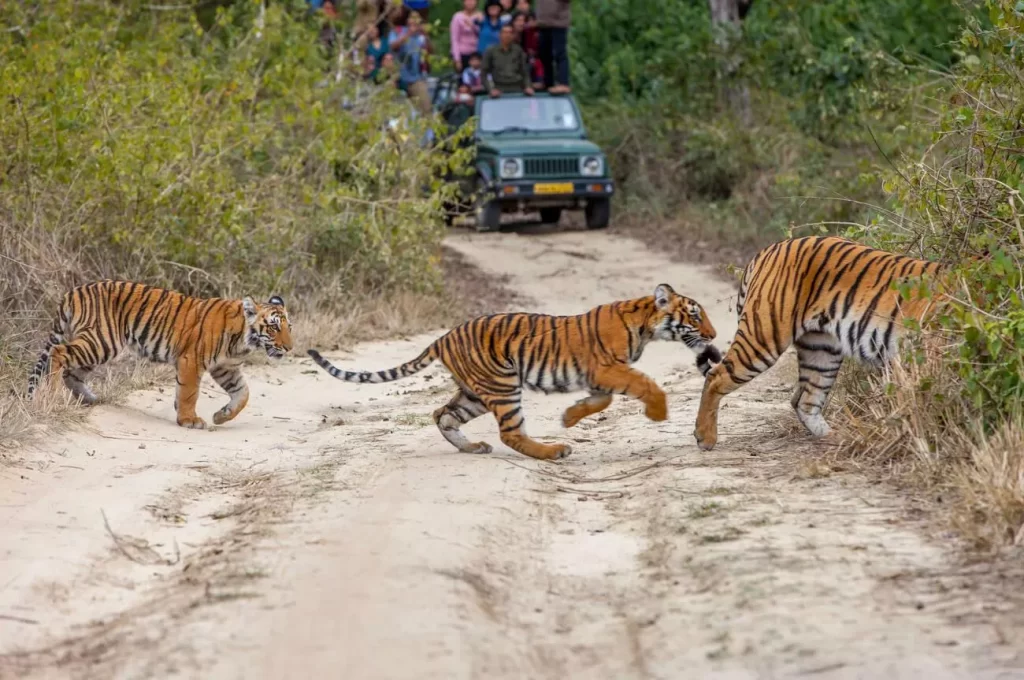
Ask any wildlife guide where you have the best statistical chance of seeing a tiger, and the answer is almost always Bandhavgarh.
Why Bandhavgarh tops the list
With around 100+ tigers in just 448 sq km of core area, Bandhavgarh has the highest tiger density of any park in the world. That translates to sighting probabilities that can hit 80–90% on multi-safari trips, especially in prime zones like Tala and Magadhi.
The terrain is a mix of sal forests, bamboo thickets, meadows and rocky hills, with the ancient Bandhavgarh Fort sitting high above the park like a sentinel. Drives often combine tiger tracking with incredible natural beauty sunlight filtering through bamboo, open grasslands dotted with spotted deer, and the distant call of a barking deer signaling a predator nearby.
My Bandhavgarh experience
The first time I saw a tiger here, it wasn’t dramatic. We were stopped at a T-junction debating which way to turn when our guide quietly pointed ahead. A massive male was walking straight down the road toward us, completely unbothered. He stopped 10 meters away, yawned, scratched his ear with a back paw, then walked past our jeep so close I could hear his breathing. That’s Bandhavgarh tigers that act like they own the place, because they do.
Practical details
- Best time: October–June (park closed July–September); April–May for intense heat but maximum sightings.
- How to reach: Fly to Jabalpur or Khajuraho, then 3–4 hour drive; Umaria is the nearest railhead.
- Safari zones: Tala (most popular, requires advance booking), Khitauli, Magadhi (excellent alternatives).
- Who it’s for: First-timers wanting high confidence, photographers, serious tiger enthusiasts.
Plan Around Your Budget
Get a Tiger Safari Itinerary That Matches Your Budget
Whether you want a short Ranthambore break, a luxury Bandhavgarh stay or a multi-park central India safari, we can suggest the right number of drives, accommodation and route for your budget.
Request a Custom Safari Plan Discuss My BudgetRanthambore National Park, Rajasthan – Tigers among ancient ruins
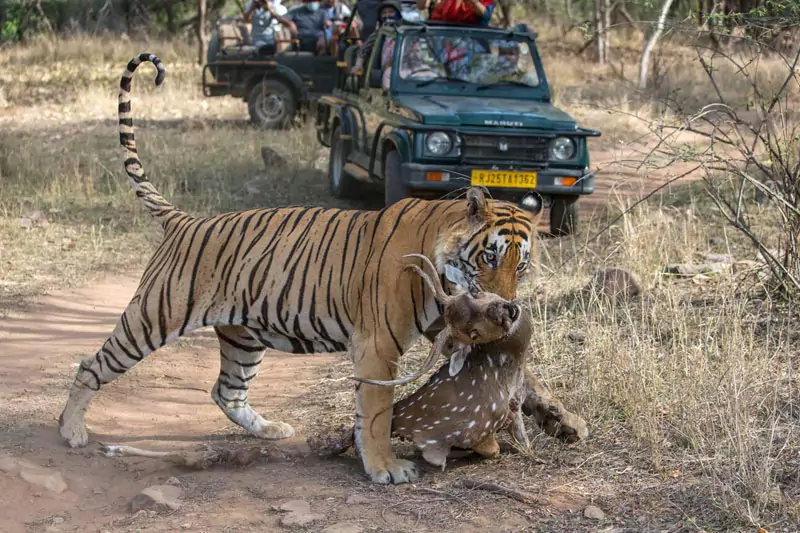
If Bandhavgarh is the “most tigers per square kilometer,” Ranthambore is the “most iconic tiger safari in India.”
What makes Ranthambore legendary
The park’s 70–80 tigers roam against a backdrop of Ranthambore Fort, crumbling temples, stepped wells and lakes that look like paintings. Tigers here are famously diurnal (active during the day), partly because of the open terrain and limited dense cover, which means you have a real shot at watching hunting, territorial displays and family interactions in daylight.
The lakes Padam Talao, Rajbagh, Malik Talao are magnets for wildlife, especially in the hot pre-monsoon months when every animal in the park comes to drink. That’s when you get those calendar-perfect shots: a tiger drinking at the water’s edge, fort towers in the background, golden-hour light.
Best zones and booking tips
Ranthambore is divided into 10 zones (1–10), and each has different character and tiger populations. Zones 1–5 are the classic core zones; Zones 6–10 are buffer but still productive. Because of Ranthambore’s popularity, advance online booking 90 days out is essential, especially for weekend and holiday slots.
Practical details
- Best time: October–June; November–February for weather, April–June for concentrated wildlife.
- How to reach: Sawai Madhopur station on Delhi–Mumbai rail line; 3–4 hours from Jaipur by road.
- Safari options: Jeep (canter safaris available but jeeps are better for serious viewing).
- Who it’s for: Golden Triangle tourists, photographers, heritage + wildlife lovers.
Tadoba-Andhari Tiger Reserve, Maharashtra – The rising star
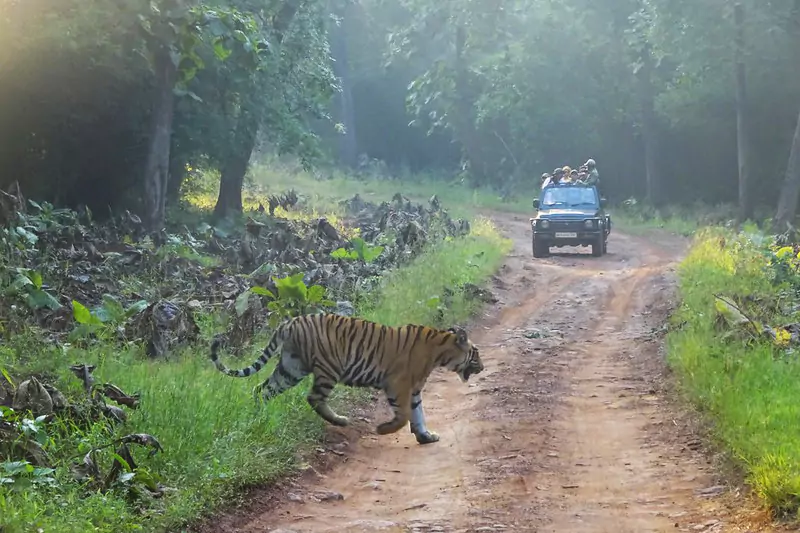
In the last decade, Tadoba has quietly become one of the most reliable tiger-sighting destinations in India, with enthusiasts often rating it as good as or better than Ranthambore for pure tiger action.
Why Tadoba delivers
With 90+ tigers in a landscape of teak forests, bamboo and lakes, Tadoba offers a high density without feeling as crowded as some Madhya Pradesh parks. The tigers here are habituated to vehicles but not tame, and they frequently use roads and firebreaks for patrols, giving you extended viewing opportunities.
One of my best Tadoba memories: a tigress called Maya walking down the center of the road at 7 AM, pausing to spray-mark a tree, then settling in the shade barely 15 feet from our stopped jeep for a full 20-minute grooming session. We could hear her tongue rasping on her fur.
Key zones
- Moharli and Kolara gates– Most popular, high tiger activity.
- Navegaon, Pangdi, Zari gates– Good alternatives, fewer crowds.
Practical details
- Best time: February–May for peak sightings; October–January for pleasant weather.
- How to reach: Nagpur airport (140 km); Chandrapur railhead closer.
- Safari bookings: Online via Maharashtra Forest Department portal; zones fill fast in peak season.
- Who it’s for: Repeat safari-goers, photographers, weekend trips from Nagpur/Mumbai.
Kanha Tiger Reserve, Madhya Pradesh – Kipling’s Jungle Book inspiration
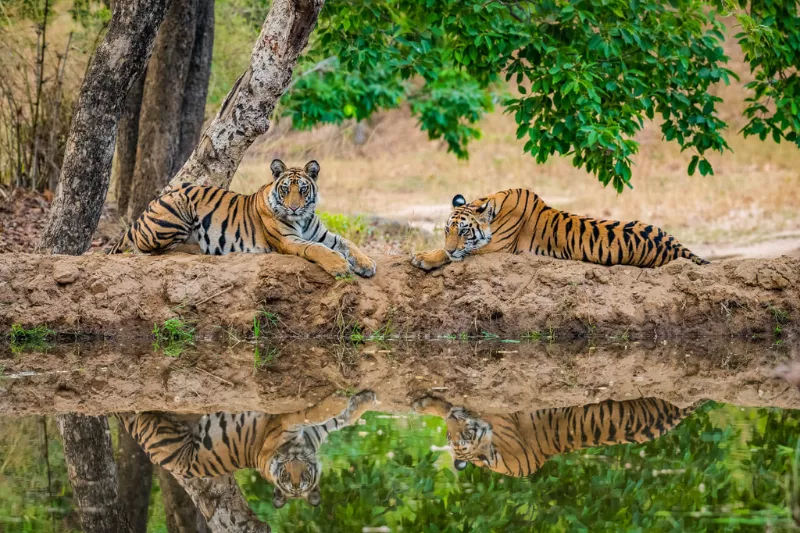
Kanha National Park isn’t just about tigers it’s about the entire Central Indian forest ecosystem at its most photogenic.
The landscape that inspired legends
Covering 940 sq km, Kanha’s signature look is vast sal and bamboo forests opening into meadows (locally called maidans) where herds of barasingha (swamp deer) graze in golden light. This is the landscape Rudyard Kipling used as the backdrop for The Jungle Book, and once you’re there, you understand why.
With 100+ tigers, Kanha offers excellent sighting opportunities, but it’s the supporting cast that makes it unforgettable: leopards in the rocky zones, sloth bears, dholes (wild dogs), gaur (Indian bison), and over 300 bird species.
Kanha’s conservation success
Kanha is famous for saving the barasingha from extinction the hard-ground subspecies was down to less than 100 animals in the 1970s, and Kanha’s focused efforts brought the population back to over 700. Watching a hundred-strong herd moving through mist at dawn is one of the great wildlife sights in India.
Practical details
- Best time: October–June; February–April for tigers, November–January for overall wildlife and birds.
- How to reach: Jabalpur (160 km) or Nagpur (250 km) airports; overnight train from Delhi or Mumbai.
- Safari zones: Kanha, Kisli, Sarhi, Mukki each with distinct character.
- Who it’s for: Nature lovers who want the full forest experience, photographers, families.
Jim Corbett National Park, Uttarakhand – India’s first and most diverse
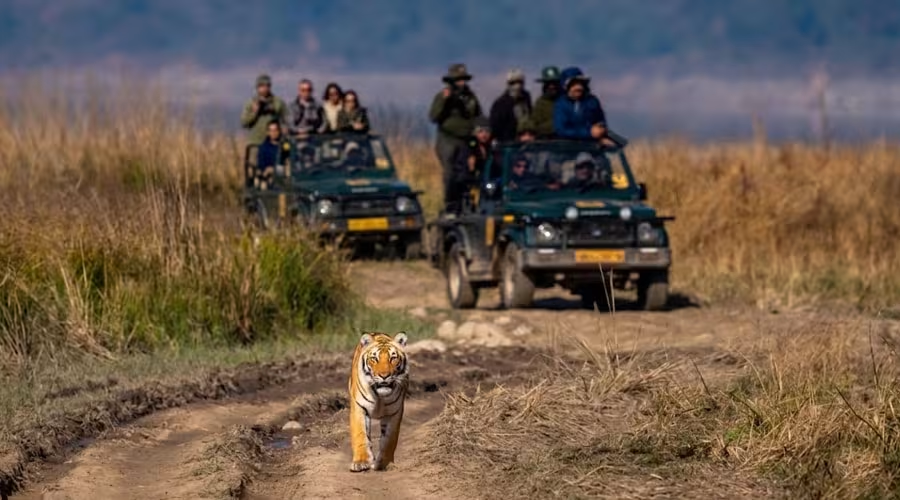
If you ask where it all started, the answer is Jim Corbett wildlife safari, established in 1936 as Hailey National Park and later renamed after the legendary hunter-turned-conservationist.
What makes Corbett special
Sprawling across 1,318 sq km of Himalayan foothills, Corbett is less about guaranteed tiger sightings and more about raw wilderness, rivers, elephants and incredible biodiversity. With terrains ranging from grasslands to riverine forests to high ridges, it supports 250+ tigers, 650+ elephants, leopards, otters, and over 600 bird species.
The Dhikala experience
The park’s Dhikala zone is legendary a core wilderness area where overnight stays in forest rest houses give you dawn-to-dusk immersion. I once spent two nights at Dhikala, watching elephants cross the Ramganga River at sunset, hearing a tiger roar from the ridge behind the compound at 4 AM, and waking to a peacock orchestra. You don’t always see the tiger, but you feel the tiger.
Practical details
- Best time: November–June; November–February for birding and elephants, March–June for concentrated tiger activity near rivers.
- How to reach: Ramnagar railhead; Pantnagar or Dehradun airports, then 2–4 hour drive.
- Safari zones: Dhikala (lottery-based), Bijrani, Jhirna, Dhela each requires separate permits.
- Who it suits: Delhi NCR travellers, nature enthusiasts, families wanting Nainital/Ranikhet add-ons.
Pench Tiger Reserve, Madhya Pradesh/Maharashtra – The real Jungle Book jungle
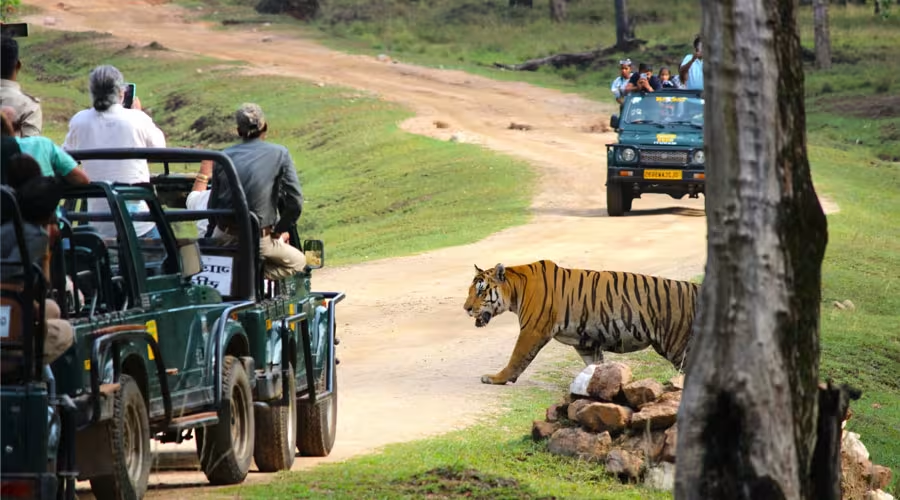
Straddling the MP-Maharashtra border, Pench is where Kipling actually spent time, and the Waingunga River that flows through it is mentioned in The Jungle Book.
Why Pench feels authentic
With around 50+ tigers in a landscape of teak, bamboo and riverine forest, Pench offers a quieter, less commercial vibe than Kanha or Bandhavgarh while still delivering good sightings. The terrain is rolling and scenic, with the river creating natural gathering spots for wildlife.
One afternoon safari here, we followed a tigress for nearly an hour as she marked territory, called for her cubs, and finally settled at a waterhole. No other jeeps, just us and the forest that’s the Pench advantage.
Practical details
- Best time: October–June; February–May for tigers.
- How to reach: Nagpur (90 km) for MP side; Turia gate from Seoni.
- Safari options: Both MP and Maharashtra sides operate safaris; Turia, Karmajhiri and Jamtara gates.
- Who it suits: Travellers combining MP and Maharashtra, mid-range budgets, Jungle Book fans.
Satpura Tiger Reserve, Madhya Pradesh – Walking with tigers
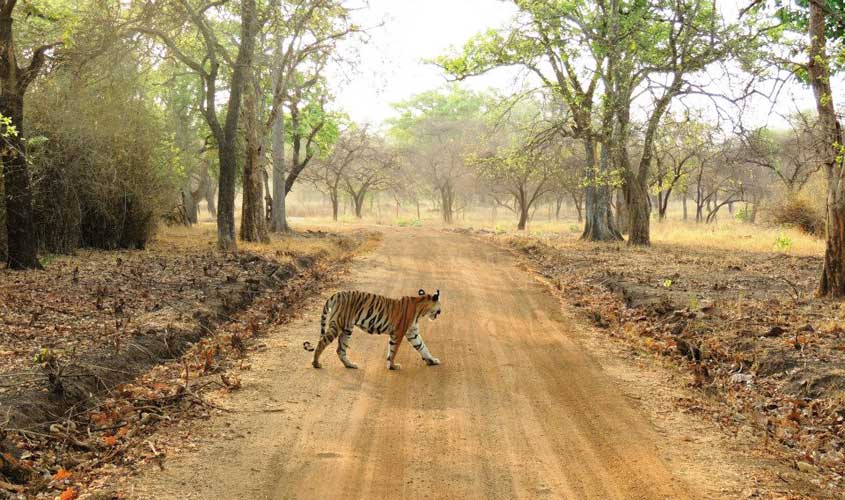
Most Indian parks restrict you to vehicles. Satpura breaks that rule with walking safaris, boat safaris and overnight camping in the core zone a completely different experience.
What makes Satpura unique
Located in the Satpura hills, this reserve covers rugged, hilly terrain with deep valleys, rivers and thick forest. The tiger population is healthy but sightings are harder because of dense cover. However, Satpura isn’t really about “ticking tigers”it’s about being in the forest on foot, tracking signs, learning plants, watching birds, and feeling what it’s like to be prey.
I did a full-day walking safari here with armed guards, crossing streams, climbing ridges, and examining fresh leopard scat. We didn’t see a big cat, but we heard one, and that was enough to make every hair on my neck stand up.
Practical details
- Best time: October–June; November–March ideal.
- How to reach: Bhopal or Jabalpur, then road transfer.
- Safari options: Jeep, walking, boat, canoe, cycling most variety in India.
- Who it suits: Adventurous travellers, repeat visitors, nature immersion seekers.
When is the best time for tiger safaris in India?
Tiger reserves generally operate October/November to June, closing during peak monsoon (July–September) for breeding season and to let the forest recover.
Season breakdown
October to mid-December – Parks just reopened, greenery lush, weather pleasant. Good overall wildlife but tigers still spread out.
Mid-December to February – Cool to cold mornings, peak tourist season. Excellent birding, comfortable safaris. Tigers near water but forest still thick.
March to mid-June – Hot, dry, and the best time for serious tiger sightings. Water sources shrink, vegetation thins, animals concentrate near lakes and rivers. Temperatures can hit 45°C but photography and sighting quality peak.
If you can handle heat and early starts, April and May are statistically your best bet for tiger encounters.
How to book tiger safari permits in India
Every park has limited daily vehicle quotas and zonal allocations, so advance booking is critical, especially for popular reserves.
Booking process
- Register on official portals90 days in advance (Ranthambore, Corbett, Bandhavgarh, Kanha, Pench all have state forest department booking sites).
- Choose zone and time slot– Morning safaris (6–10 AM) and afternoon (3–6 PM typically).
- Upload ID proofs for all passengers (Aadhaar, passport, driver’s license).
- Pay online– Fees vary by park, vehicle type (jeep vs canter), and nationality.
- Carry permit and IDs to the gate no exceptions.
Tatkal (last-minute) bookings often open 24–48 hours before safari dates but sell out in minutes.
Tips from experience
- Book multiple safaris across different zones to increase chances.
- Hire experienced naturalists they read animal signs and know movement patterns.
- Go with smaller operators who focus on wildlife rather than volume tourism.
- Avoid weekends and holidays if possible fewer vehicles mean better experiences.
Tiger safari costs in India (2026 estimates)
Budget varies widely by park, season and accommodation.
| Park | Jeep Safari (Up to 6 Guests) | Approx. Cost Per Person | Indian / Foreigner Price Difference |
|---|---|---|---|
| Bandhavgarh National Park | ₹6,000–₹8,000 | ₹1,000–₹1,300 | Foreign visitors may pay around 5–10 times more, depending on permit and safari category. |
| Ranthambore National Park | ₹5,500–₹7,000 | ₹900–₹1,200 | Yes, safari pricing differs for Indian and foreign visitors. |
| Tadoba-Andhari Tiger Reserve | ₹4,500–₹6,000 | ₹750–₹1,000 | Moderate difference depending on permit type and visitor category. |
| Kanha National Park | ₹5,000–₹7,000 | ₹850–₹1,200 | Yes, foreign visitor charges can differ from Indian visitor charges. |
| Jim Corbett National Park | ₹6,000–₹9,000 | ₹1,000–₹1,500 | Yes, the final cost may differ for Indian and foreign visitors. |
Note: Safari prices are approximate and may change based on park rules, safari zone, permit availability, vehicle type, guide fee, season, weekend or holiday surcharge, and applicable taxes. Always confirm the final price before booking.
Total trip budget (3D/2N): ₹20,000–35,000/person including stay, safaris, meals, transfers for Indians; ₹40,000–80,000+ for foreigners.
Essential tips for your first tiger safari
After two dozen safaris across India, here’s what I wish I’d known on Day One:
- Patience is everything– Tigers are wild. Some days you’ll get 10 minutes with a tigress; other days just pug marks. That’s the deal.
- Listen to alarm calls– Langur chatter, sambar barks, peacock shrieks these tell you predators are near.
- Dress in neutral tones– Greens, browns, khakis. Avoid bright colors and heavy perfumes.
- Bring binoculars and zoom lens– 300mm+ if you’re serious about photography.
- Stay quiet in the jeep– Loud talking spooks animals and annoys other wildlife lovers.
- Respect forest rules– No littering, no smoking, no getting out of vehicles, no off-roading.
- Tip your guide and driver– They work hard and local knowledge is priceless.
FAQs about tiger safaris in India
Bandhavgarh National Park is often one of the best choices for travellers whose main priority is tiger sightings, while Ranthambore is ideal for tigers combined with Rajasthan heritage, and Tadoba is popular for consistent wildlife-focused safaris. The best park depends on your travel dates, budget, preferred landscape and whether you want a luxury, family or photography-oriented experience.
Bandhavgarh National Park is widely known for high tiger density and strong sighting potential, particularly when visitors book multiple safaris across Tala, Magadhi or Khitauli zones. Tadoba and Ranthambore are also strong choices, but no tiger sighting can ever be guaranteed because animal movement, weather, zone allocation and luck all matter.
March to June is generally the best period for tiger sightings in India, especially April and May, because dry conditions reduce vegetation and wildlife gathers near remaining water sources. November to February is more comfortable for weather, birdwatching and families, while many parks close or restrict safari operations during the monsoon season. Always check the individual park’s current seasonal calendar before booking.
Ranthambore, Bandhavgarh and Kanha are excellent first tiger safari choices. Ranthambore is easy to combine with Jaipur, Agra and Delhi; Bandhavgarh offers strong tiger-focused safari potential; and Kanha gives visitors a complete central Indian forest experience with grasslands, deer, birds and other wildlife.
Bandhavgarh is often preferred for travellers focused mainly on tiger sightings, while Ranthambore is better for visitors who want tigers, lakes, fort views and a Rajasthan itinerary in one trip. Bandhavgarh has dense central Indian forest, meadows and a high tiger population, whereas Ranthambore offers a more open, historic landscape and easier access from Jaipur or Delhi.
Tadoba can be an excellent alternative to Ranthambore for serious wildlife travellers, particularly those who want a tiger-focused trip with access through Nagpur. Ranthambore is more convenient for Golden Triangle travel and combines wildlife with historic scenery, while Tadoba is often chosen for its forest experience, several gate options and dedicated safari atmosphere.
Book at least three or four safari drives for a better overall wildlife experience. More time in the forest gives you opportunities to visit different zones, observe changing morning and afternoon conditions, and reduce pressure on one single drive. For photographers and serious wildlife enthusiasts, a three- to four-night stay with multiple safaris is usually more rewarding.
No, tiger sightings are never guaranteed in any Indian national park. Tigers are wild, free-ranging animals, and sightings depend on the safari zone, season, time of day, animal movement, weather, vehicle allocation and chance. A responsible safari operator should never promise a tiger sighting; instead, they should help you plan enough drives and choose a park that suits your goals.
A jeep safari is usually better for wildlife viewing, photography and families because it carries fewer guests and gives a more flexible experience. Jeeps normally accommodate up to six visitors, while canters carry larger groups and can be more affordable. The available vehicle type and booking rules differ by park, so check the current official permit policy before reserving a safari.
For popular parks and peak travel dates, book several weeks or months in advance. Ranthambore, Bandhavgarh, Kanha, Tadoba and Corbett often have limited permits, especially for weekends, holidays and high-demand safari zones. Booking early gives you a better chance of preferred dates, more safari drives and suitable accommodation.
Yes, tiger safaris are generally safe for families when visitors follow park rules and the instructions of trained guides and drivers. Stay inside the vehicle, keep voices low, do not feed or approach wildlife, and choose a reputable safari operator. Families with young children may find cooler months more comfortable than peak summer.
Wear comfortable, neutral-coloured clothing in shades of khaki, olive, brown or grey. Carry a warm jacket or layers for winter mornings, and use a cap, sunglasses, sunscreen and breathable clothing in warmer months. Closed shoes are practical, and bright colours, strong perfumes and loud accessories are best avoided.
Carry your government-issued photo ID, safari permit confirmation, drinking water, camera or binoculars, sun protection and weather-appropriate layers. A small dust scarf can also be useful. Photographers should bring spare batteries, memory cards and a suitable zoom lens, but avoid packing large unnecessary bags.
Bandhavgarh, Ranthambore, Tadoba and Kanha are all strong wildlife photography destinations, but each offers a different visual experience. Bandhavgarh is known for tiger-focused moments in sal forest and meadows; Ranthambore offers lakes, fort ruins and open terrain; Tadoba has teak forest, bamboo and waterholes; and Kanha is especially beautiful for meadows, barasingha and wider forest landscapes.
Ranthambore, Bandhavgarh, Kanha and Pench have several high-end wildlife lodges and luxury safari experiences. The best destination depends on the style of accommodation you prefer, the airport or road route that suits your trip, and whether you want tiger sightings to be the central focus or part of a broader cultural itinerary.
Jim Corbett National Park and Ranthambore National Park are among the most practical tiger safari options from Delhi. Corbett is commonly reached by road or train via Ramnagar, while Ranthambore is usually accessed through Sawai Madhopur or by road from Jaipur. Ranthambore is often easier to include in a Golden Triangle itinerary.
The cost of a tiger safari in India varies by park, safari zone, vehicle type, guide fee, nationality, travel season and accommodation level. A shared jeep is usually less expensive per person than a private jeep, while luxury stays and peak-date permits raise the total trip cost. Use current official park rates and ask for a written breakdown covering permits, guide, vehicle, taxes, transfers, meals and hotel charges before booking.
For a first tiger safari, a three-night stay with four to six safari drives is a practical starting point. If you have more time, combine two nearby central Indian parks, such as Pench and Kanha, or Bandhavgarh and Kanha. For a culture-and-wildlife route, combine Ranthambore with Delhi, Agra and Jaipur.
Final thoughts: Why chase tigers in India
India’s tiger reserves aren’t just about the 3-second Instagram clip of a tiger crossing a path. They’re about sitting in a forest at dawn, breath visible in cold air, waiting for a sambar’s alarm call. They’re about the thrill of finding fresh pug marks and knowing the tiger walked here five minutes ago. They’re about quiet moments a spotted owlet blinking at you from a tree hollow, a herd of chital frozen mid-graze, light slanting through bamboo like cathedral beams.
And yes, sometimes it’s about that heart-stopping encounter when a tiger walks into view and locks eyes with you, and for a moment you’re not a tourist in a jeep you’re just another mammal in the forest, and the tiger is deciding whether you’re interesting.
That’s why people keep coming back. That’s why India remains the global tiger safari capital. And that’s why, whatever parkyou choose, you should go.